
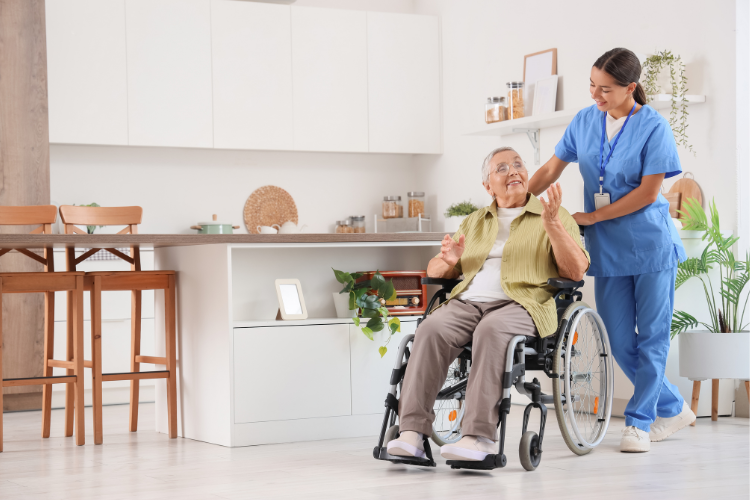
The day a parent comes home from the hospital can feel like the finish line. After the tests, the waiting, and the worry, everyone is ready to exhale. Learn how hospital to home transition care can support recovery.
But the truth we have learned over many years is that home is often where the real work of recovery begins. The first two weeks after a discharge are one of the most fragile stretches in a person’s care. It is also when families are most on their own.
Think about what changes overnight. In the hospital there was a call button, a nurse down the hall, and a schedule for every medication. At home, all of that lands on a spouse or an adult child who may already be stretched thin. New prescriptions. Follow-up appointments. Instructions that made sense in the room but blur by the time you pull into the driveway.
This is how good recoveries quietly go sideways. A missed medication. A follow-up that never gets scheduled. A small fall in a bathroom that was never set up for someone moving slowly. Many hospital readmissions do not come from the original illness at all. They come from the gaps in those first days home.
Here is the part we want families to hear. Those gaps are preventable.
What transitional support actually looks like
Transitional care is simply support built around that window. It can be a caregiver in the home for the first stretch, someone to handle the trips, the meals, the reminders, and the watching. It can be a care manager who reads the discharge paperwork, calls the doctor with the questions you did not think to ask, and makes sure the home is safe before the first night back.
It does not have to be permanent. Sometimes a few weeks is all it takes to get someone steady on their feet again. Sometimes those weeks reveal that a little ongoing help would make everyone’s life easier. Either way, you learn what your loved one actually needs by watching how the days go, not by guessing.
A few questions to ask before discharge
If someone you love is heading home soon, a few questions can save you a great deal of stress:
- What does a normal day need to look like for the first two weeks, and who is going to be there for it?
- Which medications changed, and does anyone besides the patient understand the new routine?
- Is the home set up for how they move right now, not how they moved a month ago?
- Who do we call when something feels off at 9 PM, before it becomes a reason to go back to the hospital?
None of these require a medical degree. They just require someone thinking ahead while everyone else is relieved.
The goal is not to take over
Recovery is rarely a straight line. The goal of good transitional care is not to take over. It is to hold the hard part steady so your loved one can heal at home, where most people recover best.
If you are looking at a discharge date and feeling unsure about what comes next, that is exactly the moment worth a conversation. We are always glad to help a family think it through.
Learn more about our geriatric care management and transition support or contact our team to schedule a care assessment.